

Critical midterm elections in the US approach their final stretch, with the political landscape portending significant realignments. The final polling stations will close in Hawaii and Alaska, while initial results are anticipated after 01:00 Greek time from the sparsely populated village of Dixville Notch in New Hampshire. At 6 in the morning, the final polling station will also close. Estimates to date indicate that Republicans head toward losing the House of Representatives, while the major electoral contest now focuses on the Senate, where the battle remains exceptionally close. Projections presented show Democrats securing approximately 230 seats in the House of Representatives, a fact that would grant them control of the chamber.
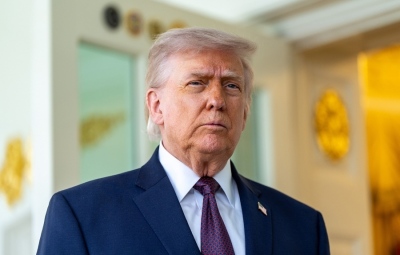
However, if Republicans manage to maintain a majority in the Senate, Donald Trump will continue to constitute a significant political counterweight, retaining maneuvering room to advance his agenda. Indeed, the Senate may well remain under Republican control, even by a narrow margin, a development that would keep the political game in Washington wide open. At the level of total popular vote, estimates speak of a potential Democratic lead on the order of 6 percentage points. It is recalled that in the House of Representatives battle, all 435 members are elected for a two-year term, while in the Senate, 35 out of the 100 Class 2 seats are contested for a six-year term. Concurrently, gubernatorial elections are taking place in 39 states and US territories. The outcome of this comprehensive electoral contest will determine which party controls legislative power and the President's ability to pursue their agenda, shaping US midterm elections.
Six states decide the Senate
If the House of Representatives appears to head toward Democrats, the Senate constitutes the actual arena of the major battle. A total of 35 out of the 100 Senate seats are contested in the elections, while 23 of these are located in states won by Trump in 2024. Out of the 100 Senate seats available for 2026, 35 are available. According to projections by analysis platform Real Clear Politics (RCP), Democrats could win a total of 47 seats, while Republicans could win 44. In 10 states, candidates' odds are roughly tied, in 8 Republicans hold a slight advantage, and a victory in 6 states would suffice to secure half the seats in the upper chamber of Congress. Vice President Vance would also secure remaining votes. Russia's Dubravsky Consulting calculated that Republicans will lose the House of Representatives, but consider the US Senate up for grabs. Nevertheless, the most probable scenario involves Republicans maintaining Senate control due to Vance. The six highly critical contests that can determine Senate control are in Alaska, Iowa, Kansas, Ohio, South Carolina, and Texas, influencing US Senate balance.
What happens in the House of Representatives
In any case, the electoral contest constitutes an exceptionally difficult test for Republicans, as historical tendency dictates that the governing party suffers losses in midterm elections. However, Trump attempts to overturn this tradition by transforming the contest into a referendum on his policy agenda, the economy, immigration, and America's future. The truth remains that all 435 seats of the House of Representatives are under contention. Currently, Republicans hold 219 seats against 214 for Democrats, with two vacant positions. According to Real Clear Politics estimates, Democrats will win 227 out of the 435 seats. According to the Cook Political Report, Democrats possess the opportunity to win 230 up to 237 seats in the House of Representatives. Democrats require four to five additional seats to assume control of the chamber, but will hardly secure them. Roughly 28 districts are characterized as actual toss-ups, while remaining ones are distributed among categories where one or the other side's lead is deemed more or less secure. House Speaker Mike Johnson insists polls are wrong. And this is not the first time electoral projections fail to capture true Republican momentum.
The six critical states
Alaska: Republican Senator Dan Sullivan confronts an exceptionally difficult battle against Democrat Mary Peltola. The latter leads narrowly in polls, while the electoral contest has been burdened by the case of a second Dan Sullivan's candidacy, a fact that has triggered political and judicial confrontation.
Iowa: Republican Ashley Hinson and Democrat Josh Turek run virtually neck-and-neck. Republicans hold a significant historical advantage, as Democrats have not won a Senate election in the state since 2008. However, increased fuel costs and pressures sustained by the agricultural sector generate problems for the GOP.
Kansas: Republican Roger Marshall confronts Democrat Adam Hamilton in a contest that evolved into a genuine surprise. Despite the state's long-standing tradition favoring Republicans, Hamilton has managed to become competitive, while his personal political and religious identity complicates Republican efforts to portray him as a typical Democratic candidate.
Ohio: Democrat Sherrod Brown attempts to return to the Senate against Republican Jon Husted. Polls show Brown ahead, but the state's recent electoral history demonstrates that the conservative vote can be stronger than research records indicate.
South Carolina: Republican Darline Graham Nordone, sister of the late Senator Lindsey Graham, claims election against Democrat Annie Andrews. This constitutes a traditionally conservative state where Democrats have not won a Senate seat since 1998. Trump's backing constitutes a significant political advantage for Graham Nordone.
Texas: The contest between Democrat James Talarico and Republican Ken Paxton constitutes one of the most unexpected battles of the electoral period. Texas remains a traditional Republican stronghold, yet intra-party friction and Paxton's selection have generated opportunities for Democrats, defining US midterm battlegrounds.
Trump: Polls do not capture reality
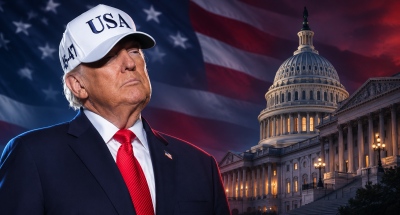
Donald Trump has repeatedly questioned poll reliability, pointing out that his supporters' electoral behavior is frequently underestimated. This does not constitute an entirely unfounded concern. In the 2024 presidential elections, for example, polls in Iowa showed Kamala Harris leading by three points in a Des Moines Register survey, yet Trump ultimately prevailed in the state by a 13-point margin. Correspondingly, in Michigan, instances occurred where polls overestimated Democratic momentum. The question, therefore, centers on whether the phenomenon of underestimating the conservative vote will repeat itself this time. Trump knows the battle is difficult. After all, he has publicly acknowledged that the President's party traditionally loses ground in midterm elections. Simultaneously, however, he insists Republicans must confront a Democratic faction moving increasingly toward the left. In his final campaign appearance at the Lincoln Memorial Reflecting Pool, the US President accused Democrats of promoting extreme policy choices and maintained that the electoral contest will determine the country's direction, shaping Trump political strategy.
The Senate is the target
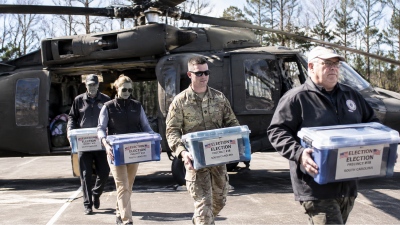
The main issue remains centered around Senate elections. Democrats and Republicans can secure majorities of only one or two seats. Therefore, when Trump speaks of rigging, he likely targets the Senate. But even here, he will challenge elections not across the entire United States, but in specific states. For example, Alaska, Texas, and other traditionally Republican areas find themselves in a difficult position this time. Another issue is that Trump lacks many options. For example, even Republicans would not approve the president's attempt to forcefully intervene in the electoral process: they worry that one day the US will be guided by someone from the left. Meanwhile, the Supreme Court, which includes Trump's proteges, does not always issue decisions he desires. As known, Trump's refusal to concede defeat in the 2020 presidential elections led his supporters to attempt seizing the Capitol building. The riots resulted in five deaths and hundreds of injuries. "The assault on the Capitol is a dark affair in which someone clearly had a vested interest. Otherwise, the mob could not have penetrated. Trump finds himself in an entirely different situation today. He may not recognize legislative election results, but this is unlikely to produce any impact. The conflict between the president and Democrats has already reached a level where any cooperation is out of the question."
Massive political crisis in US
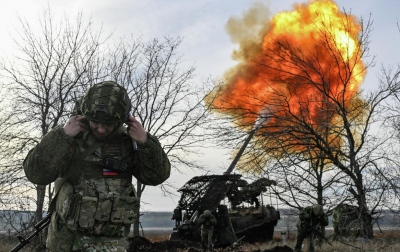
Consequently, domestic political crisis will continue escalating, and none of the participants will want to assume responsibility. The US President and Democratic members of Congress may attempt shifting public attention from domestic issues to burning foreign issues. For example, Trump will repeat attacks against Iran, and his Democratic opponents will begin supporting Ukraine. Then, the American political crisis will become a threat to the entire international community. Difficult days lie ahead internationally, impacting global political fallout.
The Democrats' major problem: Their policy agenda
Democrats have heavily invested in cost-of-living pressures, living costs, and corruption allegations, attempting to portray Trump as a President distancing himself from working-class interests. Concurrently, they leverage issues such as tariffs, economic policy, energy burdens, and US involvement in the war with Iran. However, the Democratic Party itself confronts a serious political problem: its shift toward more radical positions that do not necessarily express the entirety of American society. Trump will leverage this contradiction, portraying Republicans as the force capable of maintaining a more conservative direction in governing the country. In reality, the electoral battle concerns not only congressional control. It also concerns whether the President will possess the ability to advance his policy without confronting a House controlled by his political opponents, defining Democratic Party challenges.
The major poll trap
Prediction markets feature Democrats as favorites for Senate control, with Polymarket assigning them a 71.5% probability of victory. This, however, does not mean the contest has been decided. Margins in several states remain narrow, while experience from previous electoral cycles has proven that polls can fail significantly in capturing actual electoral behavior. Especially in the Trump era, underestimating the conservative vote has constituted a recurring phenomenon, without implying every polling error necessarily operates in Republicans' favor. Trump himself has attempted transforming his personal political influence into an electoral weapon, asking his supporters to vote as though he himself were on the ballot. The stakes are immense: if Republicans lose both chambers of Congress, the final two years of Trump's presidency could transform into a period of continuous political clashes and institutional obstacles. Conversely, if they retain the Senate and limit losses in the House, the US President will possess the ability to retain a significant share of his political influence. Election night will prove whether polls correctly captured Democratic momentum or whether Donald Trump's conservative America will reserve yet another electoral surprise. For the US President, the battle is not simply about congressional seats. It is a battle for his political legacy and for the future of the MAGA movement, shaping US election predictions.
www.bankingnews.gr









Σχόλια αναγνωστών